What are the latest trends in vaping technology? Global buyers are asking this question as product design becomes more regulated, data-driven, and safety-focused. The strongest developments are not simply brighter screens or larger clouds. They include improved battery protection, temperature control, leak-resistant structures, child-resistant packaging, USB-C charging, and clearer product traceability. Some manufacturers are also testing recyclable materials and lower-waste systems, although real-world recycling remains inconsistent.
Dr. Konstantinos Farsalinos, a cardiologist and tobacco-harm-reduction researcher, has stated, “E-cigarettes are not harmless, but they are substantially less harmful than smoking.” This caution matters. Technology can reduce certain risks, but it cannot make vaping risk-free. Buyers should examine laboratory documentation, ingredient disclosure, electrical safety testing, age controls, and compliance with local regulations. Rules differ sharply across countries. A feature accepted in one market may be restricted in another.
This guide explores ten practical trends shaping the global vaping industry. It focuses on engineering changes, responsible manufacturing, user protection, and purchasing evidence. Smart controls are useful. Yet more technology does not always mean better technology. Battery indicators can fail. “Eco-friendly” claims may lack proof. Even experienced buyers can overlook small details, such as seal quality or certification numbers. That is why careful comparison remains essential. The market is moving quickly, but reliable progress should be measurable, documented, and suitable for legal adult markets only.
Grand View Research estimated the global e-cigarette market at $28.17 billion in 2023. Its report projects a 30.6% compound annual growth rate from 2024 to 2030. This scale is driving faster development in pod formats, mesh heating, airflow control, and battery management. Global buyers should examine technical evidence, not attractive packaging alone.
Mesh coils are becoming common because they heat more evenly across the surface. Some devices now use sensors to adjust output during each draw. USB-C charging, battery indicators, and leak-resistant structures also support daily handling. Screen-based controls can improve visibility, but extra electronics may increase failure points. Small details matter.
The World Health Organization continues to stress that electronic nicotine products carry health risks and require careful regulation. Laws differ widely across countries, including age limits, advertising rules, labeling, and permitted ingredients. Buyers should request laboratory testing, electrical safety documents, and traceable batch information. Compliance remains uneven. That deserves scrutiny. Market forecasts also contain uncertainty because surveys, definitions, and reporting periods differ. Grand View Research’s estimate shows strong commercial momentum, but it does not prove consumer safety or long-term demand. A practical evaluation should balance growth data with product durability, transparent specifications, and local legal requirements.
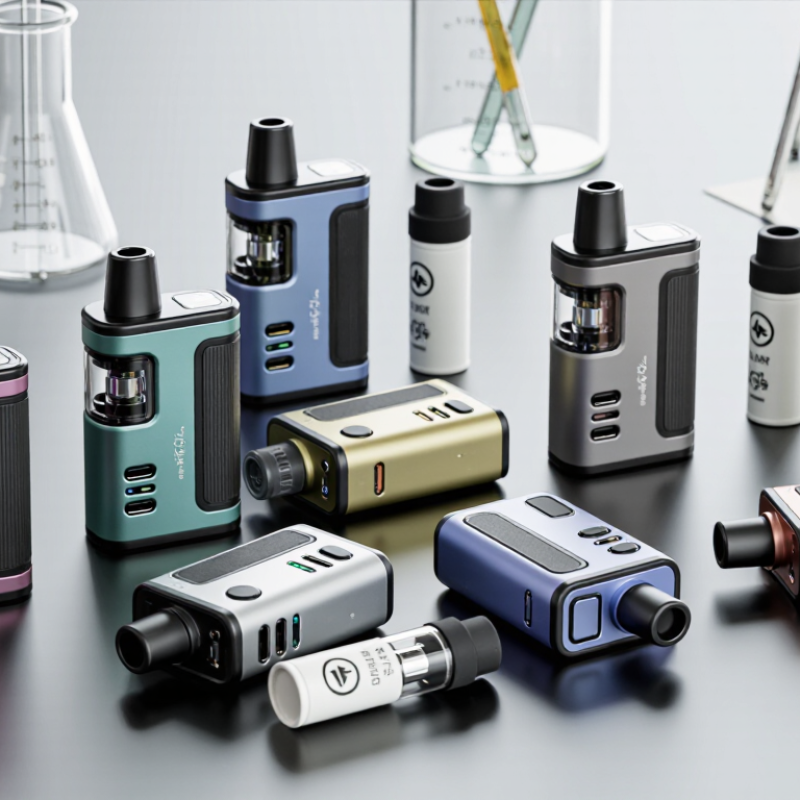
In 2024, pod systems are becoming smaller, lighter, and easier to carry. Their compact shells often fit comfortably in a pocket or palm. Many devices use sealed or refillable cartridges with clear liquid windows. This simple detail helps users monitor remaining liquid and avoid dry heating.
Nicotine salt formulations remain important in this design trend. They can deliver nicotine with less throat irritation than some traditional liquids, but they are still addictive. Global buyers should check local age rules, labeling requirements, nicotine limits, and recycling policies. Battery protection, leak resistance, and consistent airflow matter more than decorative screens. In my experience, a compact device is useful only when its controls remain clear. Tiny buttons can become frustrating, especially outdoors.
Tips: Compare cartridge availability before purchase. Check the charging port and safety certifications. Read the ingredient list carefully. Store devices away from children and pets. Do not assume every product meets your market’s standards. Some “smart” features add cost without improving daily reliability. Ask suppliers for test reports, batch details, and clear warranty terms. A careful buyer should also question exaggerated claims about flavor, battery life, or nicotine delivery.
| No. | Technology Trend | Typical 2024 Device Data | Buyer Value | Nicotine-Salt Compatibility | Important Compliance or Quality Point |
|---|---|---|---|---|---|
| 1 | Ultra-Compact Pod Form Factors | Common pocket-sized formats are approximately 80–110 mm long, 15–25 mm wide, and 20–35 mm deep. | Improves portability and discreet everyday use while reducing material and shipping volume. | Well suited to low-power, mouth-to-lung use with standard nicotine-salt liquids. | Small dimensions should not compromise battery protection, airflow control, or pod sealing. |
| 2 | USB-C Fast Charging | USB-C charging is increasingly standard, with many compact devices using approximately 0.5–1.5 A charging input. | Provides a reversible connector and shorter charging intervals than older micro-USB designs. | Supports frequent low-wattage use without requiring a large battery enclosure. | Buyers should verify overcharge, over-discharge, short-circuit, and temperature protections. |
| 3 | Integrated Mesh-Coil Pods | Common pod coil resistances are approximately 0.6–1.2 ohm, depending on the intended power level. | Mesh heating elements can provide faster heating and more even liquid vaporization than basic wire coils. | Lower-resistance mesh pods can work with salt liquids, but lower nicotine strength may be preferable at higher output. | Coil consistency, wicking quality, and dry-hit protection are key quality indicators. |
| 4 | Adjustable Airflow Control | Compact pod systems increasingly use sliding, rotating, or multi-position airflow controls. | Allows users to adjust draw tightness, vapor temperature, and perceived throat sensation. | A tighter mouth-to-lung draw is generally compatible with traditional nicotine-salt usage. | The adjustment should remain stable during handling and should not create excessive leakage paths. |
| 5 | Higher-Capacity Refillable Pods | Refillable pod reservoirs commonly range from about 2–5 mL, subject to local regulations. | Reduces refill frequency and supports a wider selection of e-liquid formulations. | Suitable for nicotine-salt liquids with balanced VG/PG formulations designed for pod wicking. | For the European Union, consumer tanks are generally limited to 2 mL under the Tobacco Products Directive. |
| 6 | Leak-Resistant Pod Structures | Current designs commonly combine silicone seals, press-fit or magnetic connections, and improved liquid-flow channels. | Helps reduce condensation, liquid loss, and user complaints during transport. | Useful for thinner nicotine-salt liquids that may migrate more easily through poor seals. | Quality testing should include inversion, vibration, temperature-cycle, and repeated-fill tests. |
| 7 | Automatic Draw Activation | Many compact pod devices use an airflow sensor instead of a physical firing button. | Provides a simple cigarette-like operation and reduces external controls. | Matches the low-to-moderate power profile commonly used with nicotine salts. | The sensor should resist accidental activation caused by condensation, wind, or pocket pressure. |
| 8 | Smart Output and Safety Regulation | Modern pod systems commonly use regulated output, puff cut-off timers, low-battery warnings, and short-circuit protection. | Improves consistency and helps protect the battery, coil, and user during normal operation. | Helps prevent excessive heating when using concentrated nicotine-salt formulations. | Buyers should request documented electrical safety testing and clear operating instructions. |
| 9 | Battery-Efficient Low-Wattage Operation | Compact rechargeable pods often use batteries in the approximate 350–1,000 mAh range and operate at modest power levels. | Balances small size, portability, and practical daily battery endurance. | Low-to-moderate output is generally appropriate for mouth-to-lung nicotine-salt vaping. | Battery capacity should be stated clearly and tested under a defined operating method rather than estimated from puff counts. |
| 10 | More Transparent Nicotine-Salt Specifications | Nicotine-salt liquids are commonly labeled in mg/mL; legal strengths vary by market, with the EU consumer limit generally set at 20 mg/mL. | Clear labeling supports correct product selection, import documentation, and responsible retail communication. | Works particularly well with compact devices designed for a controlled mouth-to-lung draw. | Nicotine products require market-specific packaging, health warnings, ingredient disclosure, and age-restriction controls. |
Smart vaping devices are moving from simple hardware toward connected consumer technology. Buyers now notice battery alerts, usage dashboards, charging history, and firmware updates. A phone app may display puff counts, session timing, and device temperature. These details can help users understand daily habits more clearly. They do not prove that vaping is safe.
Connectivity also creates practical buying signals. A reliable device should pair quickly and remain stable across ordinary commutes. Clear status lights matter when the phone is unavailable. Some buyers prefer adjustable controls, while others want fewer settings. Regional software support can vary, so global purchasers should check language options, charger standards, age verification, and local regulations. Privacy deserves equal attention. Apps should explain data collection in plain language and offer reasonable account controls.
The technology is still imperfect. Sensors may misread a short draw, and battery estimates can change suddenly in cold weather. App records may also fail after a reset or update. That is easy to overlook. Independent testing, transparent specifications, and responsive technical support provide stronger evidence than polished advertising. Buyers should compare offline operation, update policies, material safety information, and disposal guidance. Smart features are useful only when they remain dependable, understandable, and lawful in the buyer’s market.
Battery safety now defines serious vaping technology purchasing. The U.S. Fire Administration recorded 66 reported e-cigarette fires and explosions between 2009 and 2016. Its report also warned that incident data was incomplete. That limitation still matters.
Global buyers should request battery test evidence against IEC 62133-2 and transport compliance under UN 38.3. These standards address rechargeable-cell abuse testing, vibration, shock, and transport risks. Device-level evaluation may also follow UL 8139, which examines electrical, heating, and charging systems. Certificates should identify the exact battery and device revision.
USB-C improves connector durability and charging compatibility, but it does not guarantee safe charging. Buyers should check overcharge protection, temperature monitoring, current limiting, and charging cut-off performance. USB Power Delivery support must be clearly specified, not assumed from the port shape. Small details matter.
Coil design also affects safety and consistency. Stable resistance, controlled heating, and secure insulation can reduce overheating risks. However, coil claims often depend on testing conditions. A laboratory result may not represent heavy daily use. This is where supplier transparency becomes essential.
The World Health Organization’s 2023 global tobacco trends report estimated more than 1.25 billion tobacco users worldwide. That scale increases the importance of reliable hardware controls and clear instructions. Buyers should review failure-rate data, recall procedures, and independent laboratory reports. A polished specification sheet is not enough. Something may still be missing.
Regulation is becoming a core vaping technology trend for global buyers. WHO reporting identifies 88 countries without specific electronic nicotine delivery system regulation. Its data also records countries using bans, age limits, licensing, taxation, or product controls. These categories differ sharply. A “regulated” market may still lack testing rules.
WHO’s 2023 Report on the Global Tobacco Epidemic shows why compliance cannot rely on one global checklist. Buyers should verify nicotine limits, ingredient disclosure, emissions testing, health warnings, and advertising restrictions for each destination. Packaging may require child-resistant features, tamper evidence, multilingual labels, and recycling information. Small details matter.
Battery safety deserves equal attention. IEC 62133-2 testing, transport documentation, electrical protection, and charger compatibility can reduce preventable risks. The EU’s RoHS and EMC frameworks may also affect connected devices and charging systems. However, standards are not identical to market approval. This distinction is often missed.
The ECigIntelligence Global Regulatory Database also shows frequent policy changes across jurisdictions. A compliance file should include test reports, supplier declarations, traceability records, and version-controlled artwork. Keep records current. WHO data provides valuable direction, but country-level enforcement can be inconsistent. That weakness deserves more attention from buyers, not less.
WHO reports that 88 countries had no specific regulation for electronic nicotine delivery systems, while 35 countries had banned their sale as of 2024. These are separate country counts and should not be added together. The figures describe national regulatory status rather than company or brand performance.
Source: World Health Organization, “Electronic cigarettes (E-cigarettes)” fact sheet, 2024.
It may display puff counts, session timing, battery levels, temperature, and charging history. These records can reveal habits. They do not prove vaping is safe.
A device should still show basic status information without a phone connection. Clear lights can indicate charging, low power, or a fault during a commute. App dependence may become inconvenient.
No. Sensors may misread a short draw, especially during quick use. Records can disappear after a reset or software update. Cold weather may also change battery estimates suddenly.
The app should explain collected data in plain language. Check account controls, permissions, storage practices, and deletion options. Convenient features may require more personal data than expected.
No. The connector improves compatibility and durability, but safety depends on internal controls. Look for overcharge protection, temperature monitoring, current limiting, and charging cut-off performance. Port shape alone proves little.
Ask for test evidence covering rechargeable-cell safety and transport requirements. Documents should identify the exact battery and device revision. A generic certificate may not match the product in hand.
Stable resistance, controlled heating, and secure insulation can support more consistent operation. Laboratory results may not reflect heavy daily use. Real-world durability remains uncertain.
Review language support, charger standards, age verification, local regulations, disposal guidance, and update policies. Also request recall procedures and failure-rate information. A polished specification sheet may still omit important details.
Give greater weight to independent testing, transparent specifications, and responsive technical support. Ask whether testing conditions resemble ordinary daily use. I might overtrust attractive dashboards. That deserves reflection.
The latest vaping technology trends are shaped by market growth, compact design, smarter features, and stronger safety expectations. With the global e-cigarette market estimated at around $28.17 billion, manufacturers are focusing on portable pod systems, nicotine-salt compatibility, leak-resistant structures, and simplified user experiences. These developments support greater convenience while encouraging more consistent product performance for buyers in different regions.
For those asking, “what are the latest trends in vaping technology,” key areas include app-connected devices, usage monitoring, adjustable settings, improved battery management, efficient coil systems, and faster USB-C charging. Safety is also becoming central, with attention to temperature control, battery protection, quality testing, clear labeling, and responsible packaging. As regulatory requirements differ across many markets, global buyers should prioritize products with transparent specifications, reliable manufacturing documentation, and compliance support aligned with local rules.

ERA Vape