China Best Vape Devices What Are the Safety Considerations?

Time:2026-09-19 Author:Isabella
0%

Choosing among China-made vape devices requires more than comparing battery life, vapor output, or price. Safety begins with the device’s design, manufacturing quality, and traceable supply chain. A reliable product should include clear specifications, authentic certification details, protective charging features, and accessible instructions. Buyers should also verify age restrictions and local regulations before purchasing or using any device. Legal compliance matters.

So, what are the safety considerations when using vape devices? Users should inspect the battery, charging port, seals, and mouthpiece before every use. A swollen battery, unusual heat, leaking liquid, or burnt smell signals a serious warning. Stop using it. Never charge a device on a bed, under clothing, or beside flammable materials. Use the recommended charger, avoid damaged cables, and do not leave charging equipment unattended. Small habits can prevent larger problems.

Product safety also depends on responsible handling and honest information. Nicotine-containing liquids can cause dependence and should remain away from children and pets. Users should avoid modifying internal components or mixing unfamiliar liquids. Even well-tested devices are not risk-free, and marketing language may hide important limitations. Independent reviews, manufacturer records, and laboratory testing can improve confidence, but they cannot replace careful judgment. My own assessment would remain cautious because product quality can vary between batches and sellers. A practical checklist helps, yet no checklist is perfect. Awareness must continue after purchase, especially when the device feels different, performs inconsistently, or shows visible damage.
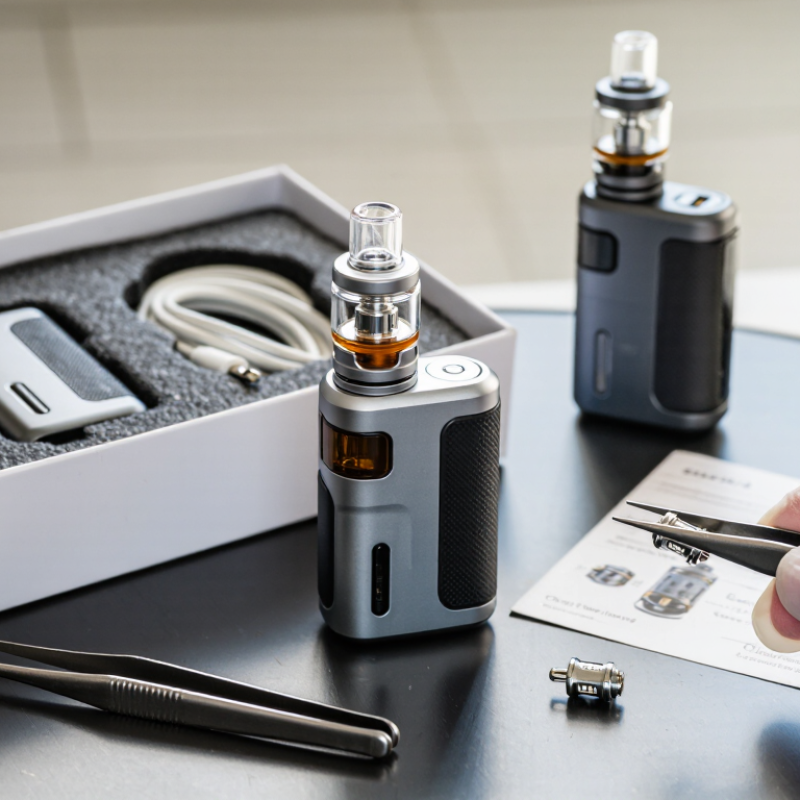
China Best Vape Devices What Are the Safety Considerations?

GB 41700-2022: China Caps Vape E-Liquid Nicotine at 20 mg/g

China Best Vape Devices: What Are the Safety Considerations?

GB 41700-2022 limits nicotine in vape e-liquid to 20 mg/g in China. This equals about 2% by mass, although mass and liquid volume are not identical. The difference matters. Buyers should check the printed nicotine concentration, batch information, and compliance markings before use. A clear label is more trustworthy than a bold marketing claim.

Nicotine can cause harm if swallowed, inhaled excessively, or absorbed through damaged skin. Keep e-liquid away from children, pets, food, and direct sunlight. A leaking pod can leave liquid on fingers or inside a pocket, so inspect seals and the mouthpiece regularly. Stop using a damaged device. Small details matter.

From a safety perspective, the nicotine cap does not make vaping risk-free. It only sets a regulatory limit for concentration. Users should avoid mixing liquids or modifying heating components, because the final nicotine level may become uncertain. Independent laboratory testing can also reveal inaccurate labels or unwanted contaminants. Still, testing is not perfect. Some consumers may assume a lower number means harmless use, which is an unsafe assumption. People who do not use nicotine should not start, while those experiencing dizziness, nausea, or a rapid heartbeat should stop and seek medical advice.

IEC 62133-2: Lithium-Ion Battery Safety Tests for Vape Devices

China Best Vape Devices: What Are the Safety Considerations?

IEC 62133-2 provides a structured way to evaluate rechargeable lithium-ion cells and battery packs. For vape devices, testing can examine external short circuits, overcharging, forced discharge, vibration, shock, crushing, and temperature changes. These tests imitate real hazards, such as a device falling from a desk or heating inside a hot vehicle.

A reliable assessment begins with cell traceability, insulation checks, and protection-circuit verification. Engineers should confirm that charging limits match the cell design. They should also inspect wiring, connectors, seals, and venting paths. Small defects matter. A loose connection can create heat before software detects a fault. Damaged, swollen, leaking, or unusually hot batteries should not be used or charged.

IEC 62133-2 testing supports safer battery design, but it does not make every device automatically safe. The standard may not cover every complete-device risk, including poor assembly, unsuitable chargers, or user modifications. A pass report is useful evidence, not a permanent guarantee. Testing can also miss weaknesses caused by aging, repeated drops, or inconsistent production. I would therefore review test records, sampling methods, production controls, and instructions together. That approach feels less convenient, but it reflects real battery behavior better. Manufacturers should also check current regional requirements and any product-specific safety standards before placing a device on the market.

China Best Vape Devices: Safety Considerations Under IEC 62133-2

Typical single-cell lithium-ion voltage references relevant to vape-device battery safety. These values are industry reference points, not IEC 62133-2 pass/fail limits; the exact operating limits depend on the cell design, battery-management system, and manufacturer specifications.

IEC 62133-2 safety evaluations address risks such as overcharge, external short circuit, forced discharge, mechanical stress, vibration, shock, and thermal abuse. Vape devices should use protected cells and charging systems designed to remain within the cell manufacturer's specified voltage and current limits.

FDA Data: Vape Aerosols May Contain Nicotine and Ultrafine Particles

When comparing vape devices, “best” should mean safer design, not stronger output. FDA information indicates that vape aerosols may contain nicotine and ultrafine particles. These particles can reach deep into the lungs. The aerosol is not harmless water vapor.

Look closely at the device’s construction. A clear ingredient label matters. So does stable temperature control. Excessive heat may increase aerosol production and create additional chemical compounds. Avoid damaged batteries, loose charging ports, and devices that become unusually hot. Small details matter. Use the charger recommended by the manufacturer, and never charge a device on bedding or near flammable materials. Keep liquids away from children and pets.

Nicotine can cause dependence, even when the vapor feels mild. Some products may also deliver more nicotine than users expect. A person may take repeated puffs without noticing the total intake. That is an easy mistake. FDA findings support reading labels carefully, but labels cannot answer every safety question. Testing methods, device settings, and user behavior can change exposure.

No checklist is perfect. I would question any product promising completely safe use or “clean” vapor. People with breathing problems, heart conditions, or nicotine sensitivity should seek qualified medical advice before use. If coughing, chest pain, dizziness, or breathing difficulty appears, stop using the device and obtain medical help. Safety claims deserve evidence, not attractive packaging.

China Best Vape Devices What Are the Safety Considerations? - FDA Data: Vape Aerosols May Contain Nicotine and Ultrafine Particles

Safety Dimension What the Evidence Shows Potential Concern Practical Safety Consideration Evidence Source
Nicotine exposure Vape aerosol may contain nicotine. Nicotine is highly addictive and can cause dependence. Nicotine can adversely affect adolescent brain development and is harmful during pregnancy. Keep nicotine liquids and devices away from children and pets. Pregnant people, adolescents, and non-users should not use nicotine products. U.S. FDA
Ultrafine particles The aerosol can contain ultrafine particles that may be inhaled deeply into the lungs. Deep lung exposure may contribute to respiratory irritation and other health risks; the exact risk varies by device, liquid, and use pattern. Do not assume that visible vapor is harmless air. Avoid use around children, pregnant people, and individuals with respiratory conditions. U.S. FDA
Chemical constituents Vape aerosol may contain volatile organic compounds, flavoring chemicals, and other potentially harmful substances. A substance considered safe to eat is not automatically safe to inhale after heating and aerosolization. Use only legally marketed products where applicable, avoid modifying liquids, and do not add substances not intended by the manufacturer. U.S. CDC
Metals and heating elements Aerosol can contain metals such as nickel, tin, and lead, which may originate from device components or heating elements. Metal exposure can vary with device construction, coil condition, liquid composition, power settings, and use. Do not use damaged, leaking, or visibly corroded devices. Replace worn components according to the applicable instructions. U.S. CDC
Battery and fire risk Lithium-ion batteries can overheat, catch fire, or explode, particularly when damaged, improperly charged, or carried loose. Burns, property damage, and serious injury are possible. Use the correct charger, follow charging instructions, keep the device away from extreme heat and flammable materials, and never carry loose batteries with metal objects. U.S. FDA
E-liquid poisoning Liquid nicotine can be toxic if swallowed or absorbed through the skin or eyes. Children are particularly vulnerable to accidental exposure. Store liquids in their original, clearly labeled containers, tightly closed, and out of reach of children and pets. Clean spills immediately and seek medical advice after exposure. U.S. FDA
Secondhand aerosol People nearby may inhale aerosol containing nicotine, particles, and other substances. Non-users may be exposed even when they do not use the device themselves. Use only where permitted and avoid vaping indoors, in vehicles, or near children and other non-users. U.S. CDC
Youth and pregnancy Nicotine can harm the developing adolescent brain and is not safe during pregnancy. Potential effects include addiction and harm to fetal development. Vape products should not be used by youth, young adults, or people who are pregnant or breastfeeding unless advised by a qualified healthcare professional. U.S. CDC
Regulatory and product status FDA authorization to market a tobacco product does not mean the product is safe or “FDA approved.” FDA states that no e-cigarette has been approved by the agency as a smoking-cessation aid. Marketing claims may overstate safety or effectiveness. Check applicable local regulations and do not rely on “safer,” “clean,” or “FDA approved” wording without verifying the specific regulatory status. U.S. FDA

Note: Vape aerosol is not harmless water vapor. Risk can differ according to the liquid, device design, heating conditions, maintenance, and frequency of use. This table is for general information and is not medical advice.

ISO 20768:2018: Standardized Testing of Vape Aerosol Emissions

ISO 20768:2018 gives laboratories a repeatable way to test vape aerosol emissions. It defines machine settings, puff volume, duration, and intervals. These details matter. A device tested with 55-millilitre puffs may produce different results under heavier use. The standard improves comparison, but it does not declare any device safe.

Researchers can collect aerosol on filters and measure substances such as nicotine, carbonyls, metals, and particulate matter. The National Academies of Sciences, Engineering, and Medicine reported in 2018 that aerosol may contain potentially toxic substances, although levels are generally lower than in combustible tobacco smoke. That difference is meaningful, not absolute. ISO testing also cannot fully recreate a person’s changing puff patterns, cleaning habits, or damaged heating parts.

Quality teams should report the exact test conditions beside every result. Temperature drift, liquid residue, and poor calibration can distort measurements. The World Health Organization’s 2023 tobacco trends report estimated 1.25 billion adult tobacco users worldwide in 2022, showing why consistent exposure research remains important. Still, laboratory numbers need careful interpretation. I would question any claim based on one test setting, especially when repeated-use results are missing.

TPD Rules: EU Limits Nicotine E-Liquid to 20 mg/mL and Tanks to 2 mL

For EU-bound vape devices, safety begins with compliance, not appearance. The Tobacco Products Directive limits nicotine e-liquid to 20 mg/mL and refillable tanks to 2 mL. Refill containers are limited to 10 mL. These limits reduce accidental exposure, but they do not make vaping risk-free. Nicotine remains addictive.

Look for child-resistant closures, leak-resistant connections, clear liquid-level markings, and reliable battery protection. The European Commission’s Special Eurobarometer 539 reported that 3% of Europeans used e-cigarettes daily in 2023, while 2% used them occasionally. This usage makes consistent safety controls important, especially around charging and storage. Keep devices away from children, heat, and loose metal objects.

The UK Office for Health Improvement and Disparities’ 2020 evidence review found vaping substantially less harmful than smoking, while stressing that it is not harmless. That distinction matters. A compliant 2 mL tank can still leak if seals wear out. A certified battery can still become dangerous when damaged or charged incorrectly. Inspect the tank, stop using cracked parts, and follow the supplied charging guidance. Data supports careful harm reduction, not careless use. Some safety advice feels obvious, yet real-world mistakes remain common.

FAQS

What nicotine concentration is allowed in vape e-liquid in China?

The limit is 20 mg/g, roughly 2% by mass. Mass and liquid volume are not identical.

What information should buyers check on an e-liquid package?

Check the nicotine level, batch details, compliance markings, and clear instructions. Printed information matters.

Why should e-liquid be kept away from children and pets?

Nicotine can harm people or animals if swallowed, inhaled excessively, or absorbed through damaged skin.

What should someone do if a pod leaks?

Stop using it temporarily. Clean exposed liquid from your fingers and inspect the seals and mouthpiece.

Does the nicotine limit make vaping risk-free?

No. It only limits concentration. Lower nicotine does not mean harmless use.

Why is mixing e-liquids or modifying heating parts risky?

The final nicotine level may become uncertain. Modified heating parts can also change temperature and device behavior.

What does IEC 62133-2 testing examine in rechargeable batteries?

Testing may examine short circuits, overcharging, forced discharge, vibration, shock, crushing, and temperature changes.

Can a battery safety test guarantee that a device is always safe?

No. A pass report is useful evidence, not permanent protection. Aging, drops, poor assembly, and unsuitable chargers still matter.

What signs suggest a battery should not be used?

Do not use batteries that are swollen, leaking, damaged, or unusually hot. Stop charging them.

What records should safety reviewers examine beyond a test report?

Review cell traceability, sampling methods, production controls, charging limits, wiring, insulation, and user instructions. The paperwork may still miss real-world weaknesses.

Conclusion

When considering what are the safety considerations when using vape devices, users should pay attention to both e-liquid content and device construction. In China, GB 41700-2022 limits vape e-liquid nicotine concentration to 20 mg/g, while IEC 62133-2 provides safety testing requirements for lithium-ion batteries, helping reduce risks such as overheating, short circuits, and damage during charging. Devices should be used only with compatible chargers, kept away from extreme temperatures, and inspected regularly for leaks or battery defects.

Vape aerosols may contain nicotine and ultrafine particles, so they should not be assumed to be harmless. ISO 20768:2018 supports standardized testing of aerosol emissions, improving consistency when evaluating device output. In the European Union, TPD rules limit nicotine e-liquid to 20 mg/mL and tank capacity to 2 mL. Following applicable regulations, avoiding unauthorized modifications, storing products safely, and keeping them away from children and non-users are essential steps for reducing potential health and technical risks.

Isabella

Isabella

Isabella is a dedicated marketing professional with a sharp focus on driving brand growth and engagement through strategic content creation. With an extensive background in digital marketing, she combines her passion for storytelling with her keen understanding of industry trends to deliver......